Featured Post

Public Presentation 2017

Showing posts with label [about this course]. Show all posts

4/07/2018

OLFACTORY GAMES became a finalist in Art and Olfaction Awards 2018 (Sadakichi Award)

I'm pleased to announce that my course Olfactory Games (Smell and Art) has become a finalist in the 5th Art and Olfaction Awards.

This time I didn't submit my own work but "a course". I never expected that it would make it, to be honest. I appreciate the judges that made a unique decision. Applause to my colleagues at ArtScience, and all the students who participated in the course! We never stop creating new games.  

Some of the students will give presentations at the pre event Experimental Scent Summit on 18-19 Apr 2018 in London.  Award ceremony (gala) is on the 21st of Apr.


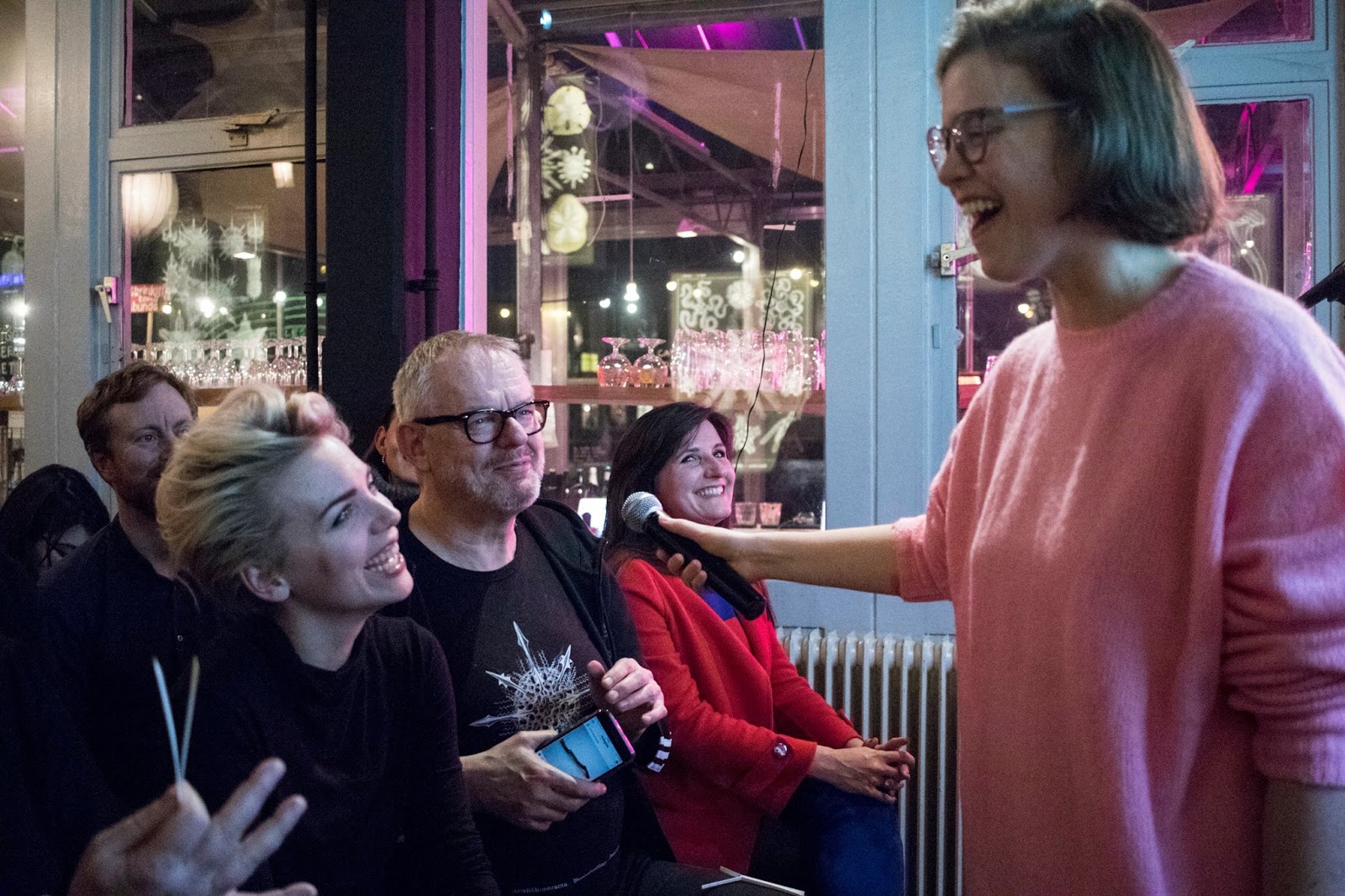
photo: Lucia Guglielmetti

Olfactory Games 
Maki Ueda started her olfactory art course Smell and Art in 2009 at the ArtScience Interfaculty. In the course students learn a conceptual and abstract approach to the medium of smell. The use of smell goes beyond the representational use and focuses on its qualities and experience without a need for a narrative or context. The students are challenged to develop olfactory games using this approach. Furthermore, they learn chemical skills by extracting and composing smells to support their creations. The game format challenges our imagination: while we always have limited fragrance materials, we never stop thinking of new games. The Japanese traditional olfactory game Kodo is a good example of this.

Maki Ueda is an olfactory artist who explores olfaction with an abstract and conceptual approach. She was the World Technology Awards finalist in 2009 (category: art), and the Art and Olfaction Awards finalist in 2016 (Sadakichi Award). She is a guest teacher at ArtScience Interfaculty of the Royal Academy of Art and Royal Conservatoire, The Hague, The Netherlands. Maki Ueda is currently based in Okinawa, Japan. www.ueda.nl

Course conception: Maki Ueda

Participating students: June Yu, Lauren Jetty Howells-Green, Kay Churcher, Sophia Bulgakova, Ana Oosting, Abel Fazekas, Ilia Lukovnikov, Vera Khvaleva, Sunna Svavarsdottir, Mischa Lind, Stefano Zucchini, Georgia Kosmatou, Koen de Groot, Tudor Ulrich, Anni Nops, ...and all the students participating in the past courses.

Course given at: ArtScience Interfaculty of the Royal Academy of Art and Royal Conservatoire, The Hague, The Netherlands


Release from Art and Olfaction Awards:


FOR IMMEDIATE RELEASE

April 5, 2018

MILAN— We are pleased to announce the nominees for the 2018 Art and Olfaction Awards, which we made public in a special press event at Esxence, in Milan, on April 5, 2018. 

Awarded to just four perfumes, one experimental scent project and two special awards — the Aftel Award and the Contribution to Scent Culture — a year, The Art and Olfaction Awards are designed to raise public interest and awareness around new developments in independent perfumery. The Awards, established in 2014 by the Institute for Art and Olfaction, are given to outstanding creators in the categories of independent, artisan, and experimental perfume from across the globe, chosen for perfumes released in 2017. 

The fifth annual Art and Olfaction Awards events will take place in a public ceremony at The Tabernacle. Continuing the tradition of holding the awards in unique locations in different perfume capitals of the world, the Tabernacle is a Grade II-listed building in Powis Square, Notting Hill, west London, England, built in 1887 as a church and converted into an arts center in the 1970s.  

Each Art and Olfaction Award winner will receive The Golden Pear, which continues to cement its status as a prestigious achievement in the perfume world.

As with past years, our panel of esteemed judges includes luminaries from the perfume and art worlds. The members of the Art and Olfaction Awards 2018 jury include:  Andy Tauer (Switzerland), Antonio Gardoni (Italy), Christopher Gordon (USA), Grant Osborne (UK), Harald Lubner (Germany), Josh Meyer (USA), Sarah McCartney (UK), Andreas Wilhelm (Switzerland), Bibiana Prival (USA), Dana El Masri (Canada), Dawn Spencer Hurwitz (USA), Matthias Janke (Germany), Ulrike Knöll (Germany), Spyros Drosopoulos (Netherlands), Cristiano Canali (France/Italy), Denyse Beaulieu (France), Helder Suffenplan (Germany), Jeanne Doré (France), Katie Puckrik (England), Luca Turin (Greece), Mark Behnke (USA), Ashraf Osman (Switzerland), Caro Verbeek (The Netherlands), Darin Klein (USA), Sarah Baker (England), Simon Niedenthal (Sweden)
Zoe Crosher (USA), Frederic Jacques (USA), Hall Newbegin (USA), Mandy Aftel (USA)

The Art and Olfaction Awards was founded in 2012 as an independent awards mechanism designed to celebrate innovation and excellence in artisan and independent perfume, and experimentation in scent within arts practices. The Art and Olfaction Awards are a program of The Institute for Art and Olfaction, a 501(c)3 non-profit based in Los Angeles, CA.

The Art and Olfaction Awards could not exist without the generous support of our partners at Lucky Scent / Scent Bar, Pochpac, Perfumers Apprentice, Esxence, Barrister and Mann, Aftelier Perfumes, Nez – La Revue Olfactive, Basenotes, ÇaFleureBon, AutumnSeventy, Perfumed Plume Awards. 

The Institute for Art and Olfaction is a 501(c)3 non-profit based in Los Angeles, CA. The Institute for Art and Olfaction advances public and artistic engagement with scent. We do this by initiating and supporting arts projects that utilize the medium of scent, by providing accessible and affordable education in our experimental laboratory as well as in partnership with institutions and community groups, and by celebrating excellence in independent and artisan perfumery through our yearly award mechanism, The Art and Olfaction Awards. Through these efforts, we extend the world of scent beyond its traditional boundaries of appreciation and use.


For press inquiries please contact:
Maxwell Williams, Press and Communications Officer

maxwell@artandolfaction.com - 213-271-6145

3/29/2018

Presentation at Experimental Scent Summit v.2

Some of the students will present their games at: Experimental Scent Summit in London, U.K on Apr 18-19.
http://artandolfaction.com/projects/2nd-annual-experimental-scent-summit/

This course is mentioned in Caro Verbeek's article

Cited from:

https://futuristscents.com/2018/03/13/smelling-can-make-us-better-scholars-artists-and-more-sociable-tolerant-human-beings-if-we-start-educating-our-noses/

...
Smell courses in art academies: fresh perspectives 
More and more art students (the Royal College of Art, the Hague, the Royal College of Art, London and PXL Mad, Hasselt) are taught how to engage with new and demanding (museum) audiences through the sense of smell.
The Dutch-Japanese artist Maki Ueda has been teaching the course ”Smell and Art” at the ArtSicence Interfaculty at the Royal Academy of Arts the Hague for almost 10 years now. Ueda choose the olfactory game as a starting point because it requires a creative approach, that is neutral in a sense that the quality and nature of the scents are less important than the sense of smell itself:
“From the beginning I made a conceptual and abstract approach to medium of smell […] We always have limited fragrance materials but we never end up with thinking of new games”
Beside challenging her students to playfully explore the limits of our most neglected sense in order to get acquainted with its characteristics and peculiarities, there is also a practical dimension. Students actually learn the basic skills of perfume making:
“There needs to be a poetic aesthetic dimension too. That is why I teach students a somewhat scientific approach to the medium of smell by extracting and composing, in order to entertain their audience in a creative way”


...

3/16/2018

Odorama: Game Edition @ Mediamatic, Amsterdam

For centuries, 'kodo' has been played in Japan, the game and art of appreciating incense. For a more intense and realistic experience of games, game-makers in the West nowadays also use scent. In this Odorama edition on 14 February, olfactory artists and designers take scent to a different level. From traditional games to digital olfactory play and virtual reality, this edition plays with scent beyond the everyday experience. Even the smell of dreams - a rarely researched phenomenon will be discussed. 
https://www.mediamatic.net/en/page/369913/odorama-game-edition

With: Simon Niedenthal, Marie Ehrndal, Maki Ueda, Natali Blugerman. 
Sudents of ArtScience interfaculty: Sophia Bulgakova, Sunna Svavarsdottir, Lauren Jetty Howells-Green, Georgia Kosmatou and Kay Churcher.

Odorama is curated by Caro Verbeek

Information
Odorama: Game Edition
Wednesday 14 February
Program starts at 20:00
Mediamatic Biotoop, Dijksgracht 6, Amsterdam
Tickets: €7,50 pre-sale | €10 door | Students €5 (incl. Administration fee) https://mediamatic.stager.nl/web/tickets/154993


9/09/2017

Course Syllabus 2017 - Smell and Art

Smell and Art
an introduction to the artistic use of the smell medium
Maki Ueda

Often in olfactory art, the focus is on smell itself. It is used for evoking memories and feelings, for emphasizing manifestations or making statements. We will take a different approach that focuses more on our perception of smell and less on the meaning of smell. Smell is in itself neutral. It's the audience that attributes meanings such as "this is the smell of apple" or "this is a bad odour" based on their personal experiences and history.

In the course we will depart from the above perspective and regard smell as something neutral. In the first half of the course we discuss the question "what do we know, and what can we find out, about smelling?" By doing a lot of original and spontaneous study, researches and experiments you will quickly learn more about your sense of smell. In the second half of the course we will focus on creating a 'simple' artwork, interface, or game.

Blog of the previous years: http://smellart.blogspot.com 
Website of Maki Ueda: http://www.ueda.nl

Mon 18 Sep: introduction, performance for the nose, Kohdo (Japanese traditional olfactory game) session
Tue 19 Sep: fieldwork, study of smells of nature, theory
Thu 21 Sep: extraction workshop, perfumery course 1
Fri 22 Sep: incense making workshop, perfumery course 2
Mon 25 Sep: perfumery course 3, 4
Tue 26 Sep: perfumery course 5, 6
Thu 28 Sep: preparation for final presentation
Fri 29 Sep: final presentation


48 hours in total (6 hrs each day)

* perfumery course consists of:
- smelling and studying about 100 fragrance raw natural and synthetic materials

Website we are going to use as database & reference:

Food Pairing
http://www.foodpairing.be

Odour Database
http://www.odour.org.uk

The Goodscents Company Database
http://www.thegoodscentscompany.com

Scent Culture Institute
https://www.instagram.com/scentculture/

Coffee Tastes Wheel
http://www.scanews.coffee/wp-content/uploads/2016/01/SCAA_FlavorWheel.01.18.15.jpg

ScentArt.Net
http://www.scentart.net

Labstuff (supplier)
http://www.labstuff.nl


9/30/2015

How to Confuse Your Senses? - an introduction to the artistic use of the smell medium -


Often in olfactory art, the focus is on smell itself.  It is used for evoking memories and feelings, for emphasizing manifestations or making statements. We will take a different approach that focuses more on our perception of smell and less on the meaning of smell.

I think that smell is in itself neutral. It's the audience that attributes meanings such as "this is the smell of apple" or "this is a bad odour" based on their personal experiences and history. My memories and history are different from yours, so how can I assume that what is a "sweet smell" to me will have the same meaning to you?

In the course we will depart from the above perspective and regard smell as something neutral. In the first half of the course we discuss the question "what do we know, and what can we find out, about smelling?" By doing a lot of original and spontaneous researches and experiments you will quickly learn more about your sense of smell. In the second half of the course we will focus on creating a 'simple' artwork, interface, or game all focusing on confusing the senses.

Blog of the previous years: http://smellart.blogspot.com

By: Maki Ueda http://www.ueda.nl
At: Art Science (PB301), an interfactuly of The Royal Art Academy and Royal Conservatory, The Hague, The Nertherlands
Date: 29 Sep, 1, 6, 8, 13, 15 Oct (6 hours each, 36 hours in total) 2015


9/27/2013

Syllabus 2013


Smell and Art 

2013
teacher: Maki Ueda 

What is it that we are smelling, what does it make you imagine, what does it make you feel? Could we incorporate the olfactory sense in art? Could smell be a medium carrying information? This course will deal with these questions through a combination of lectures, workshops, intermediate presentations and a final presentation. In this course we will start with looking at examples of art and the olfactory sense, then we will discuss the potential of the olfactory sense in art. The workshops will first focus on fieldwork and on observing the environment with the olfactory sense. You will smell a lot and learn how to communicate about smell with others, using a basic vocabulary for analyzing and expressing the character of a smell. Secondly we will extract smells from raw materials like soup, cheese burgers, old books, rubber tyres, flowers, and smelly T-shirts. You will learn how to do this yourself and how to compose new smells (in the most simple way).

You're expected to develop an olfactory game as a final assignment.

Website of the 2010 version:
http://smellart.blogspot.com/

DAY 1: Tue, October 1
morning:
- orientation / introducing each other
- on smelling: walk n' sniff / sniffing spaces like a dog
afternoon:
- on assignment: examples from the past year

DAY 2: Thu, October 3
morning:
- on infusing: extraction workshop
afternoon:
- on diffusing: air, wind, temperature, humidity experiments

DAY 3: Tue, October 8
morning:
- on incense: incense making workshop
afternoon:
- brainstorming on assignment

DAY 4: Thu, October 10
whole day: work on assignment

DAY 5: Tue, October 15
whole day: work on assignment

DAY 6: Thu, October 17
morning:
- final presentation
afternoon:
- for fun: Kohdo, a Japanese olfactory game

1/29/2010

Goal of This Course

In this course you will
  • (have to) smell a lot
  • learn about smell and olfaction
  • find another (hidden) dimension in the world
  • become aware of smell and that leads to a joyful, healthy, and long life (!)
There are many ways of using smell in art. You might want to perfume orange smell to your orange-colored painting, or you might want to add rose smell in an exhibition space where you show an installation that symbolizes love.

Most of the people only see the practical side of smell. Smell is like an additives that gives a good side-effect: it functions to make you feel relaxed or happy.

What we want to achieve in this course is a bit deeper than this.

Smell has a great potential as a medium. Let's use this course as a place to experiment. We'll focus on the theme smell and communication. You'll receive an final assignment (mini-project) under the theme of "olfactory game".

Syllabus + Rough Plan

Smell and Art
Maki Ueda
KABK PB301


What is it that we are smelling, what does it make you imagine, what does it make you feel? Could we incorporate the olfactory sense in art? Could smell be a medium carrying information?

This course will deal with these questions through a combination of lectures, workshops, intermediate presentations and a final presentation.

In this course we will start with looking at examples of art and the olfactory sense, then we will discuss the potential of the olfactory sense in art.

The workshops will first focus on fieldwork and on observing the environment with the olfactory sense. You will smell a lot and learn how to communicate about smell with others, using a basic vocabulary for analyzing and expressing the character of a smell.

Secondly we will extract smells from raw materials like soup, cheese burgers, old books, rubber tyres, flowers, and smelly T-shirts. You will learn how to do this yourself and how to compose new smells (in the most simple way).

Dates: 1, 2, 4, 8, 9, 11, 15, 16, 18 February
Times: Mon, tue, thu 13.00—16.00
Credits: 1.5 EC
Objective: An introduction to artistic use of the medium of smell
Literature: To be announced in class
Location: KABK PB301
No. of classes: 9 class / 3 hrs
Examination: Small assignments, attendance


Rough plan

[1] 01-02-2010

introduction
presentation of my works
Kodo demonstration (Japanese traditional aroma game / ceremony)
assignment(1) – olfactory exercise 1

[2] 02-02-2010

Discuss: How do we smell what we smell? - based on assignment (1)

[3] 04-02-2010

Discuss: smell, art, and communication
Discuss: possible mini-project topics
assignment (2) mini-project [olfactory game]

[4] 08-02-2010

Discuss: assignment (2) mini project

[5] 09-02-2010

Workshop I: smell extraction

[6] 11-02-2010

Workshop II: making incense, or others

[7] 15-02-2010

Develop mini-project

[8] 16-02-2010

Develop mini-project

[9] 18-02-2010

final presentation - assignment (2)

Posted by Maki at 11:32 AM
Labels: syllabus